If you have been asked to write a business reference letter and aren't quite sure where to get started, use one of the formatted templates provided here for guidance. Simply select the type of letter that corresponds to your need and click the image to open the template as an editable PDF. If you need assistance, check out these helpful tips.
Sample Business Recommendation Reference Letter Template
If you need to write a reference letter for business that you've worked with in the past, this sample business reference letter is a good starting point. Simply edit the template to add in details specific to your experience with the firm that has asked you to provide a written letter of reference.

Example Business Reference Letter Templates for an Individual
When it comes to writing a business reference for individuals who have worked with your firm, it's important to follow your company's policies. Some companies allow thorough character reference or recommendation letters, while others place strict restrictions on what can be shared. Verify your company's policy with the HR department, then choose the document appropriate for your situation by and clicking its image.
Comprehensive Letter of Reference
If you can write a comprehensive letter of reference without violating your company's policies, this template can be a good starting point for the document you need to create. It is fully editable, so you are free to make any adjustments necessary to accurately convey the information that you want to share.
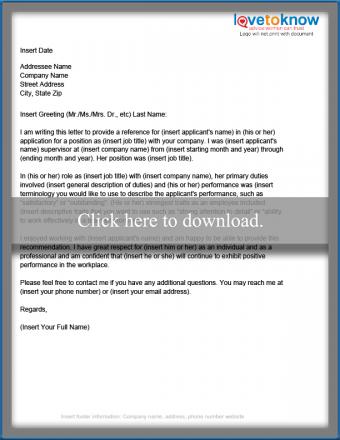
Limited Disclosure Individual Reference Letter
If your company has strict guidelines on what information you are allowed to provide in response to reference requests, there may be an internal reference form you are required to use. If not, this template may work for you. However, it's best to check with HR first to be sure that you are only providing information as allowable within your company's policies. Since the document is fully editable, you can remove or add information as needed.

Stick to the Facts in Business Reference Letters
When providing a reference letter for a business or an individual, it is essential to include only information that is factual and truthful. Be very careful not to say something that is a matter of opinion that might keep someone from being considered for future employment or that could prevent a business from being considered for a contract. It's just as important to avoid making exaggerated positive statements about a person or company. If you build up a person or company too much, that could reflect poorly on you (depending on their performance). Stick with verifiable and factual information to avoid both types of problems. If you don't honestly feel that you can give a person or a business a positive reference, it's better to just decline the request than to write something potentially harmful or over-inflated.